High school students at Nevada Union High School walked out of class Tuesday afternoon, January 20, and marched to downtown Grass Valley in a protest marked less by a single unifying cause than by a broad—and often profane—collection of grievances.
The walkout took place during regular school hours, with an estimated 100 to 200 students leaving campus and traveling on foot and by car toward the intersection of Mill and Neal streets, a common site for political demonstrations in the city. The protest coincided with the anniversary of former President Donald Trump’s inauguration and was framed by organizers online as an act of resistance to what they described as authoritarian politics.
Images and posts shared ahead of the walkout characterized the event as a “walk out to resist fascism.” In practice, however, the demonstration encompassed a wide array of political messages, many of them unrelated to one another beyond a general tone of opposition. Students carried signs addressing immigration enforcement, policing, foreign conflicts, LGBTQ+ issues, climate change, abortion rights, and partisan politics. Some signs criticized ICE (Immigration and Customs Enforcement), others expressed support for Palestine, while still others targeted the Grass Valley Police Department (“F— GVPD”) or the Republican Party as a whole.
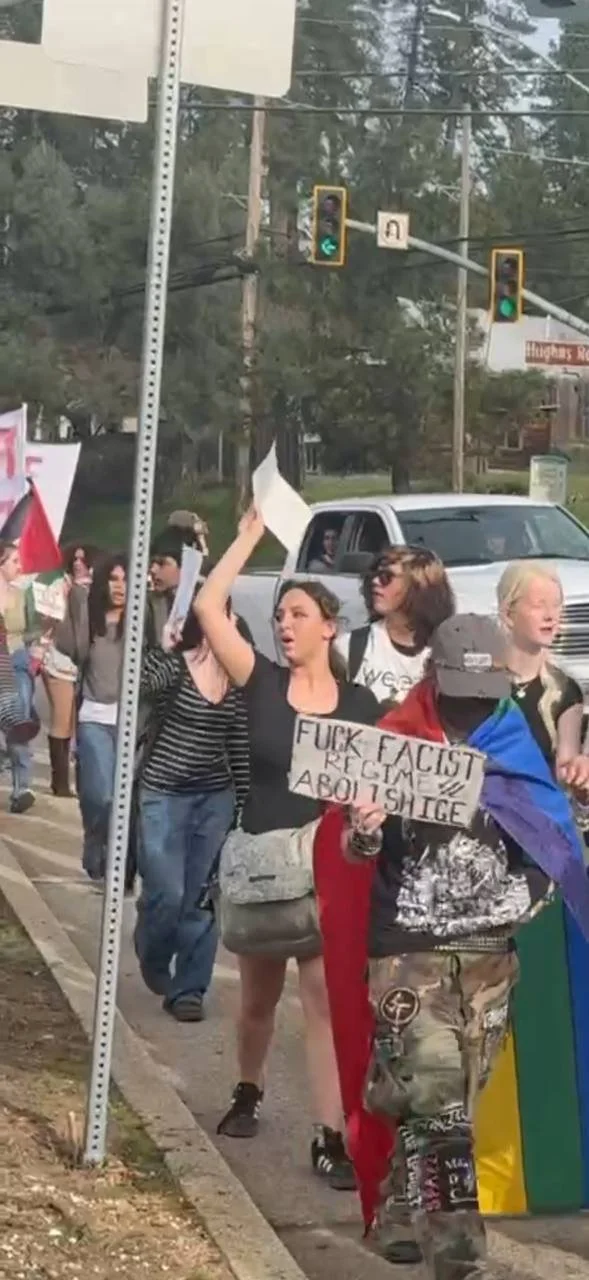
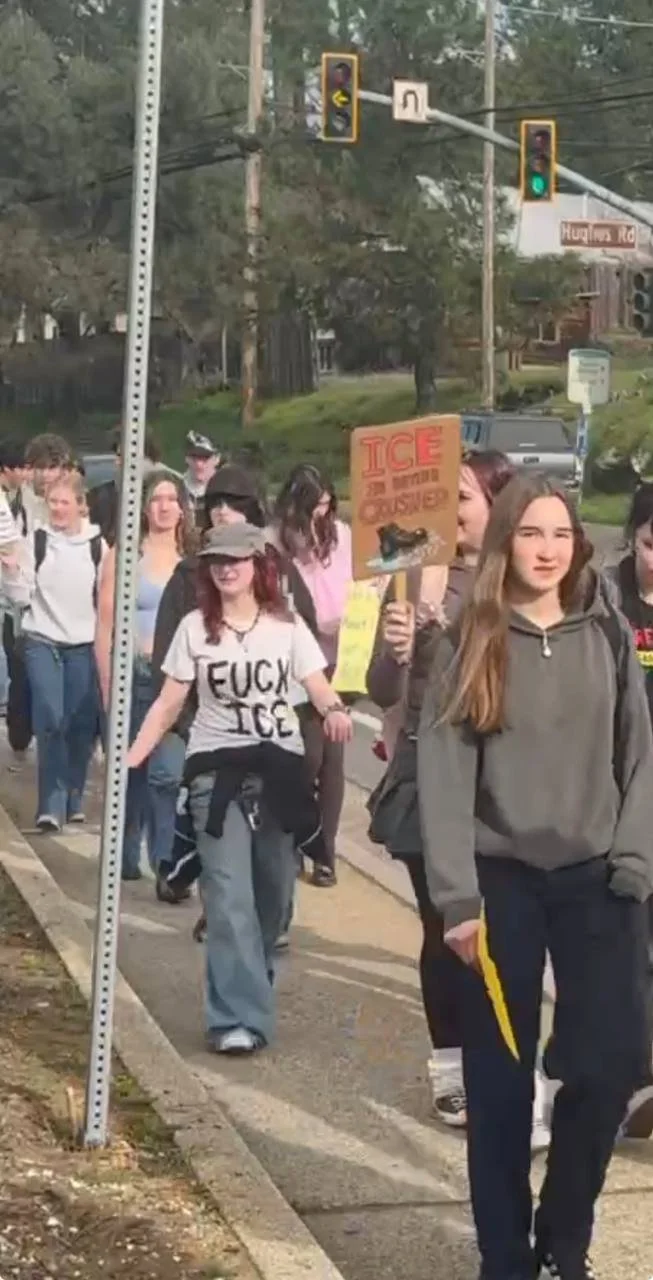
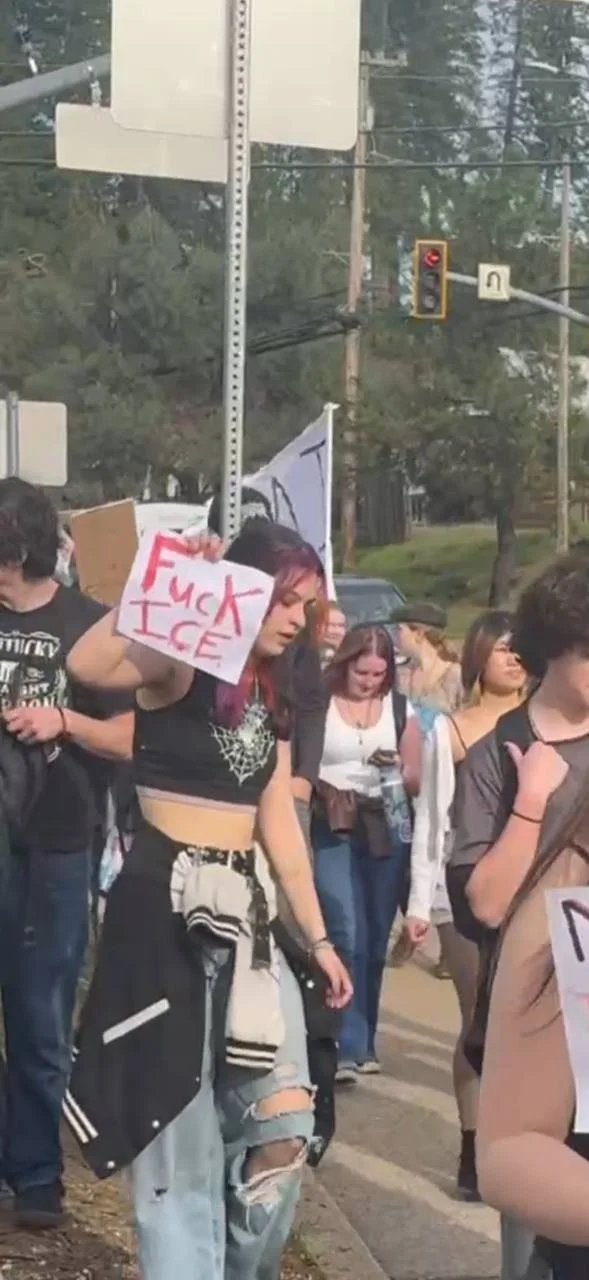
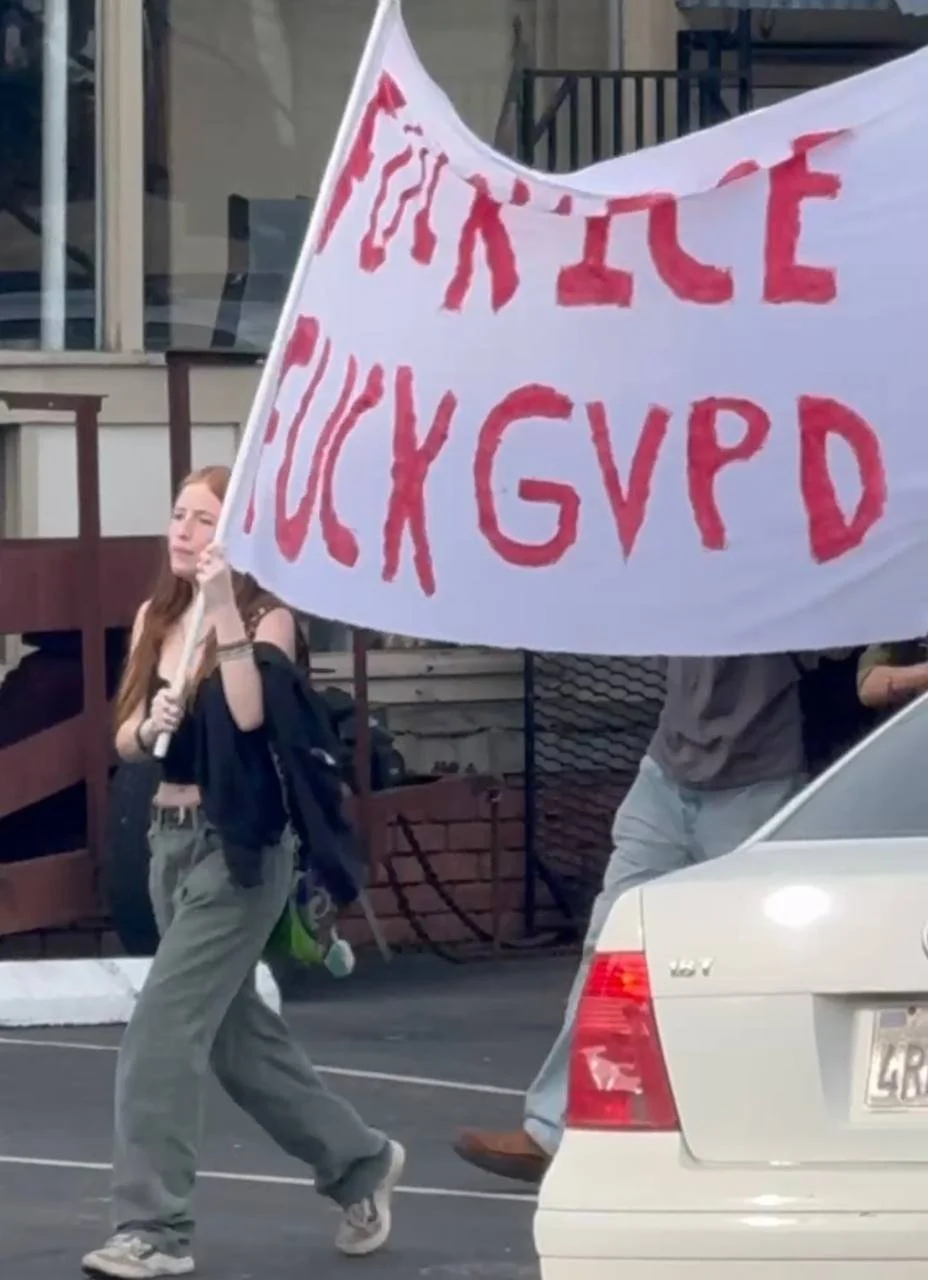
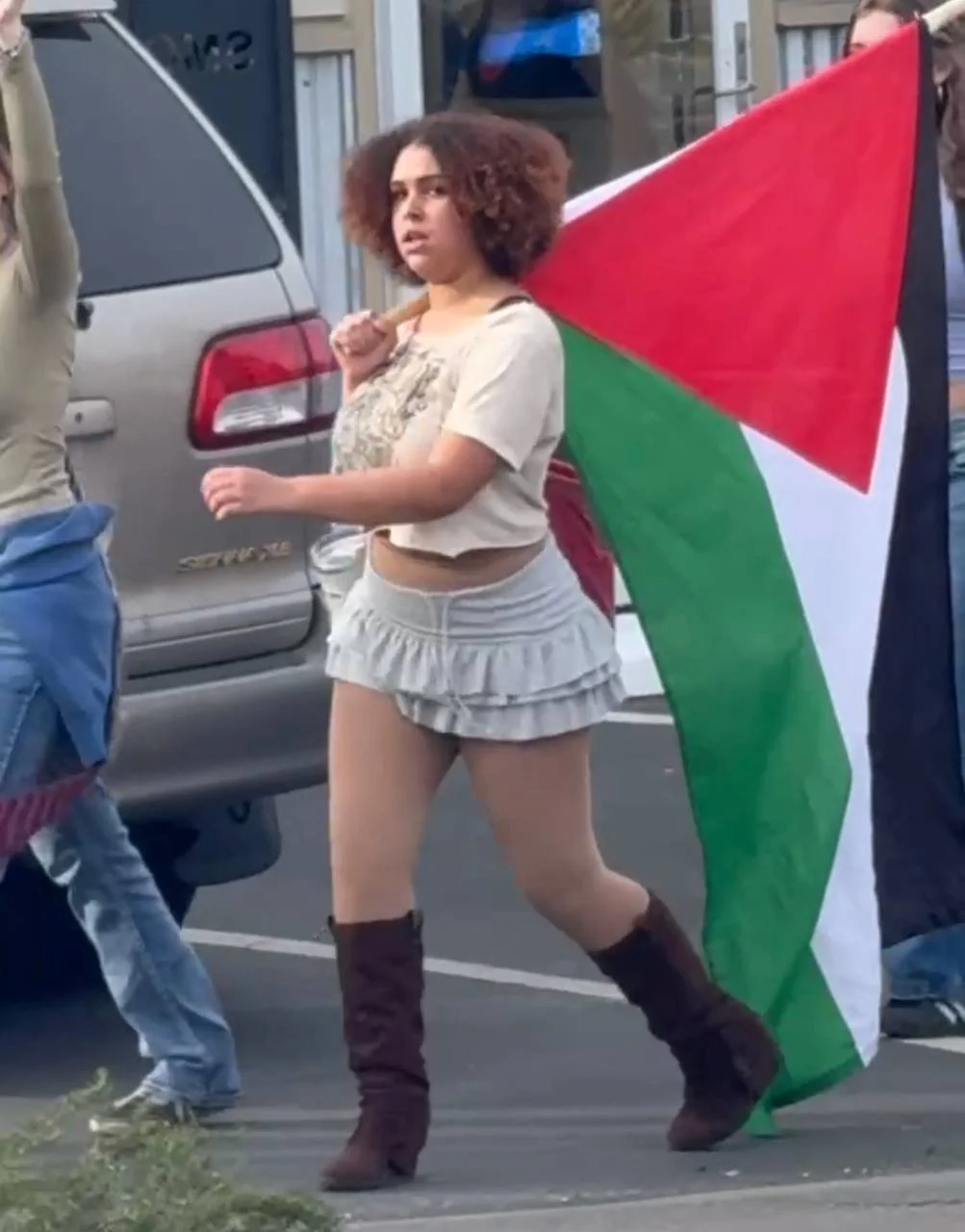
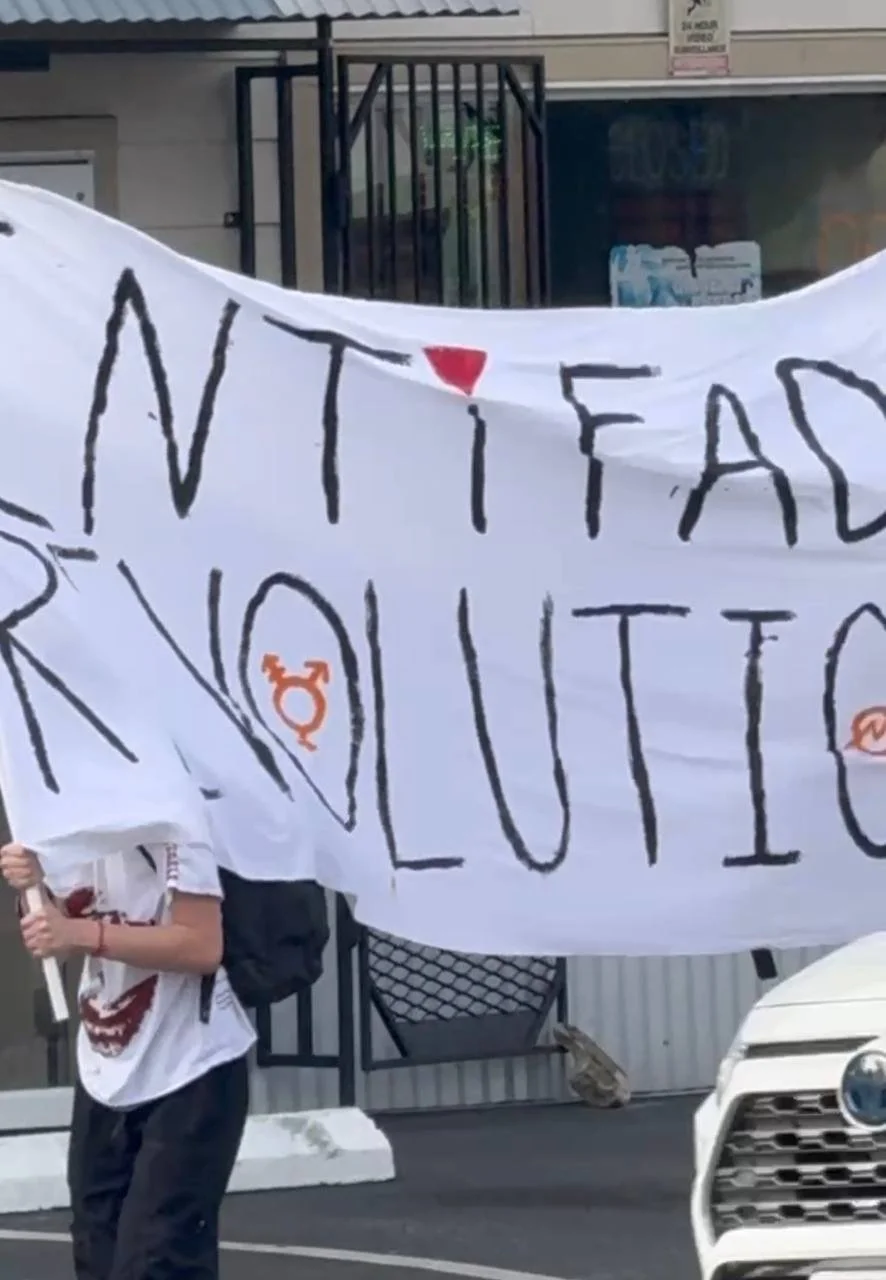
One banner carried by students used the word “Intifada” alongside a call for “revolution,” incorporating a transgender symbol into the lettering. Other posters referenced attacks on queer youth, “oil wars in Venezuela,” and what one organizer described as a federal government “waging attacks against our communities.” The messaging, taken together, formed a patchwork of causes rather than a focused platform or demand.
What did unify much of the signage was not a specific issue but language. A large number of signs prominently featured a four-letter expletive (“F—”), rendered in bold block letters and directed at a range of targets, including federal agencies, local law enforcement, and political figures. The word appeared repeatedly across signs regardless of the issue being addressed, serving as a blunt expression of anger rather than a clarifying statement of purpose. While the sentiment varied from sign to sign, the coarse language was a consistent and conspicuous element of the demonstration.
The walkout was publicized in advance on social media, including on the Nevada Joint Union High School District Student Union Instagram account. The graphic shared there called on students to leave class “on the anniversary of Trump’s inauguration” to resist what it described as his “fascist grip on government.” The post listed numerous grievances but did not outline specific goals, actions, or demands beyond the act of walking out itself.
Local authorities were aware of the planned walkout ahead of time. The Nevada County Sheriff’s Office issued a public safety announcement Tuesday afternoon alerting residents to increased pedestrian traffic and potential delays.
“A public walkout is currently underway at Nevada Union High School as part of a national walkout effort,” the statement read. It estimated that 100 to 200 students were en route to downtown Grass Valley and noted that sheriff’s deputies, school resource officers, the Grass Valley Police Department, and the California Highway Patrol had been notified. Motorists were advised to use caution and allow extra time for travel.
Students marched down Ridge Road, crossing to Hughes Road as they made their way toward downtown. At several points, traffic was slowed or temporarily blocked, including near Sierra College Drive, where a line of cars waited for the group to pass.
Reactions from the community were divided. Some residents praised the students for engaging in civic action and expressing concern about political issues that affect their future. Others criticized the walkout as an unnecessary act of truancy that could have been held after school or during the three-day weekend that had just ended.
One Nevada Union staff member, who requested anonymity, expressed skepticism about the participants, saying, “The majority of the kids that walked out today are all troublemakers, constantly caught vaping. No wonder they wanted to walk out.”
Comments on social media reflected a similar split. John Herrera, writing in a public Facebook post, raised concerns about safety and supervision. “I’m deeply concerned that under-18 students are being allowed to leave campus during active teaching and learning hours,” he wrote. “Whatever the cause, minors leaving school unsupervised and traveling through town creates real safety risks—to them and to the public.”
Others voiced support. Bob Branstrom, a former Grass Valley city councilor, wrote, “Kudos to these kids for being interested in, and taking action for, their future. Thank you law enforcement for protecting them and advising the public.”
Still others questioned whether the protest had substantive meaning. “Those kids have no idea what they are marching for,” wrote Diane Smith in a public comment. Another resident, Lisa Pera, suggested the timing undermined the message, asking whether students had attended Martin Luther King Jr. Day events the day before, during their free time.
The walkout also prompted reactions from educators beyond Nevada Union. Karen Gobert, a fourth-grade teacher at Auburn Elementary School, posted publicly that she would leave work when her students left and “skip my contract hours,” signaling solidarity with the broader idea of protest, if not with the specific event.
By the time students reached downtown Grass Valley, the demonstration had grown louder but not more focused. Additional signs joined the mix, many criticizing Trump or Republicans in general, and many continuing the heavy reliance on profanity to convey opposition.
As the afternoon unfolded, the walkout stood as an example of youth political expression that was energetic and attention-grabbing, but also diffuse. Rather than centering on a clear demand or unified cause, the protest functioned as a catchall for grievances, bound together primarily by shared frustration and the emphatic—if controversial—use of coarse language to express it.
