Why Local Representation in Congress Matters to Nevada County
Congressional districts are lines drawn on a map, but the communities within those lines can be remarkably different. Nevada County’s needs include rural water infrastructure, wildfire preparedness, evacuation, forest management, emergency communications and the growing challenge of maintaining resilient communities in high-fire-risk areas.
Those are practical local issues, and they provide a useful way to think about congressional representation without making the discussion partisan. Regardless of whether someone is a Democrat, Republican or independent, there is value in asking whether the person representing a community in Washington understands how that community actually works.
Local Knowledge and Representation
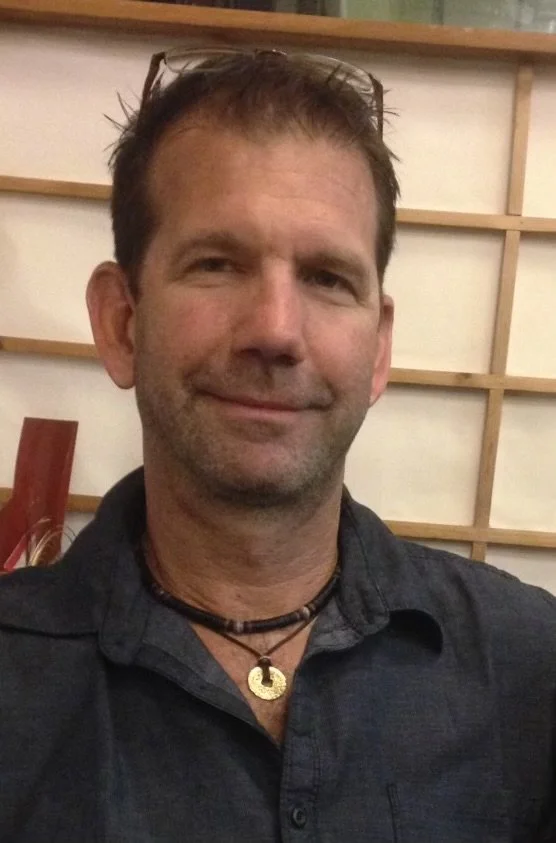
Nevada County Supervisor Robb Tucker currently represents District 2, including Alta Sierra, Lake of the Pines and unincorporated areas along Highway 49. In a County publication, Tucker described Nevada County as the community where he was born and raised. That kind of local background does not guarantee agreement on every issue or determine how anyone should vote. It does, however, provide firsthand familiarity with the rural problems local agencies are trying to solve.
Water Infrastructure and Rate Pressures
Water is one of the clearest examples. Nevada Irrigation District approved a nine percent water-rate increase for 2027 after its 2026 cost-of-service process. NID says rate revenue supports operations, capital projects, conservation and efficiency programs, and system improvements involving major water infrastructure and long-term reliability. Nevada City is also considering a proposed five-year adjustment to water and wastewater rates because, according to the City, existing revenues are not sufficient to sustain operations and needed infrastructure without drawing down reserves, delaying projects or relying on other public funds.
Someone ultimately has to pay for maintaining and replacing water infrastructure. When eligible improvements are financed entirely from local revenue, those costs place greater pressure on local ratepayers. Outside grants and low-interest financing cannot eliminate the cost, but they can broaden the sources available to pay for qualifying projects. USDA Rural Development, for example, offers loans and grants for eligible rural drinking-water sourcing, treatment, storage and distribution projects, including grants combined with loans in some cases to help keep user costs reasonable.
A member of Congress cannot simply lower an NID or municipal water bill. What a congressional office can do is advocate for federal programs, help local governments and agencies identify opportunities, support eligible community funding requests and keep local infrastructure needs visible in the federal appropriations process.
Recent Federal Funding for Local Public Safety
We already have recent Nevada County examples of why that relationship matters. Congressman Kevin Kiley’s Nevada County funding summary reports $468,000 for Truckee Police radio upgrades, $2.975 million for the Nevada County Sheriff's regional indoor training facility, $337,500 for a Nevada County Consolidated Fire District rescue snowcat package, and $150,000 for Nevada City Police radio equipment. Nevada County’s adopted budget likewise states that the Board hosted Kiley in both eastern and western Nevada County and secured congressionally directed funding for the Sheriff's indoor training facility. Kiley’s FY2025 community-project list documents the Nevada County projects and requested amounts. These are concrete examples of federal advocacy producing or advancing local public-safety investments.
Kiley is not running against Tucker, and the two should not be presented as political opponents. Tucker’s campaign announced Congressman Kiley as an endorser in April 2026. The more useful point for Nevada County is continuity: federal relationships, knowledge of local projects and persistent advocacy can matter regardless of who occupies the seat.
Wildfire Risk, Evacuation Routes, and Forest Health
Wildfire and evacuation provide another example. Nevada County reports that nearly 2,240 miles of roads in the county are privately owned, with many narrow, unpaved and bordered by overgrown vegetation. The County says these conditions can create dangerous circumstances during wildfire evacuations and for first responders trying to enter affected areas. Its Critical Evacuation Roadside Hazardous Fuel Vegetation Removal Program is specifically intended to improve ingress and egress during wildfire.
The scale of outside funding can be substantial. In July 2026, Nevada County approved its largest Good Neighbor Agreement to date, the Evacuation Safety Corridor and Protection Enhancement, or ESCAPE, program. The County says the effort covers hazardous-fuels reduction across about 3,000 acres of Tahoe National Forest over the coming decade and is backed by more than $8 million in state and federal grants across seven projects.
No single elected official should receive credit for every grant. Projects of this size typically involve county staff, fire districts, state agencies, federal land managers, nonprofits and other partners. But that is precisely why congressional representation matters: a representative and staff can be part of the network connecting local priorities to federal agencies, appropriations and funding opportunities.
Connecting Local Experience to Broader Challenges
Wildfire resilience also intersects with homeowners insurance. California, rather than Congress, regulates the state’s homeowners-insurance market, and a member of Congress cannot set California insurance rates. The California Department of Insurance identifies wildfire risk, coverage availability and reliance on the FAIR Plan as major parts of the state's insurance challenge. Federal forest management, fuels reduction and community-resilience investments can nevertheless address some of the physical wildfire risks confronting rural communities.
This is where local experience can have practical value. Someone who has lived here understands that an evacuation route that appears adequate on a map may look very different when thousands of residents are trying to use it at once. They understand why vegetation along a narrow private road matters, why water conveyance and storage infrastructure matter during wildfire, and why aging infrastructure eventually shows up in household costs.
Nevada County does not need Washington to solve every local problem. It needs local agencies capable of developing sound projects, professional staff capable of pursuing grants and partnerships, and federal representation that understands the county well enough to help those projects compete for available resources.
Water infrastructure. Wildfire protection. Forest health. Evacuation routes. Emergency communications. Homeowner resilience. These should not be reduced to Democratic or Republican issues. They are practical Nevada County issues.
The record from the past several years demonstrates that outside funding can reach Nevada County when local, state and federal partners work together. The question going forward is how that work continues and expands, particularly as water systems require greater investment and wildfire resilience remains a long-term challenge.Whatever our political affiliation, there is value in understanding the connection between local knowledge and federal representation. Washington may be thousands of miles away, but the results of effective federal advocacy can ultimately be seen much closer to home - in our water systems, emergency communications, evacuation routes, forests and the resilience of the communities where we live.